


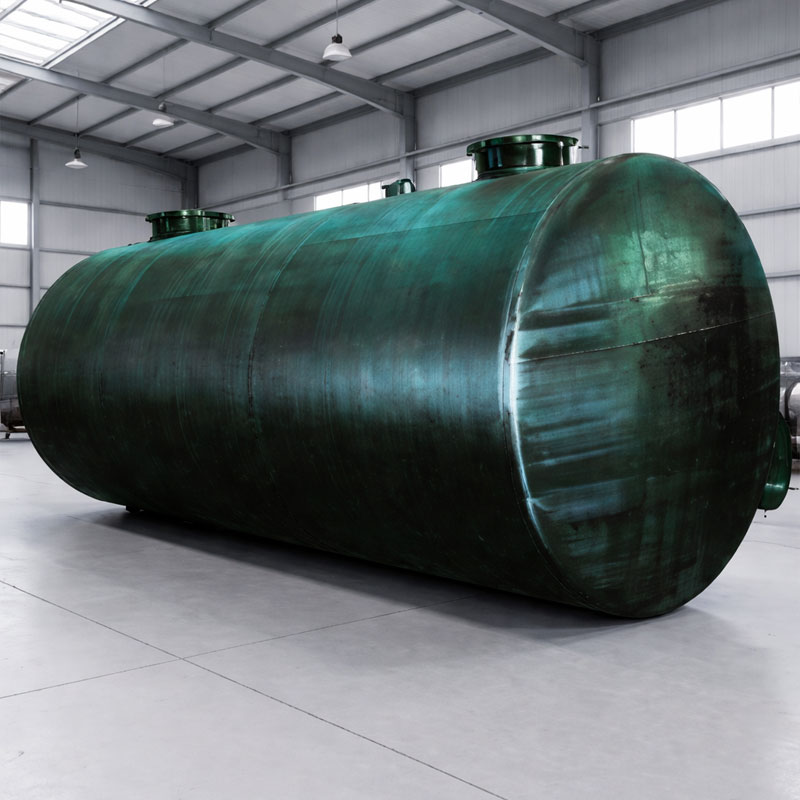
Industrial storage tanks are indispensable products in modern industrial zones, factories, and enterprises. Simply put, industrial tanks are specialized tanks used to store large quantities of water, oil, chemicals, or other liquids, depending on the intended use. Industrial storage tanks were created to facilitate your work. They receive raw materials before production and store them after production.
Industrial storage tanks are used to receive raw materials before production and store them after production. They play a crucial role in the production process; without them, many industrial zones and enterprises could cease operations. Furthermore, industrial storage tanks often require supporting equipment such as foundations, anti-static devices, and roofing.

Classification by Design
Currently, there are two main types of industrial storage tanks: vertical and horizontal. The most commonly used type today is the vertical type.
Vertical tanks: Their volume varies widely from 100 to 50,000 m³. Vertical tanks are mostly used to store gasoline, fuel oil, etc., primarily gases and liquids with low pressure. A characteristic of this type is its flat or level bottom. The tank includes main components such as vents, access doors, protective railings, and stairs.
Horizontal tanks: Their advantages are similar to vertical tanks, also capable of storing gases and liquids at higher pressures. This type of tank is easier to install and fabricate.
Depending on the intended use, careful consideration should be given to selecting the appropriate type. The location and terrain conditions are also very important factors in choosing the most convenient tank.

Classification by Material
Depending on the specific project or the type of food being stored, industrial storage tanks made of suitable materials should be selected: such as stainless steel tanks, black steel tanks, composite-coated tanks, or composite tanks.
Should you use a horizontal or vertical water tank?
As we know, industrial storage tanks come in two basic types: vertical and horizontal. So the question is: Should customers use a horizontal or vertical water tank? Horizontal water tanks have the advantage of a wide support system, making the product structure stable and safe when placed at a height. However, this type of tank takes up more space.
Vertical water tanks increase water pressure, resulting in a stronger water flow, easier use, and space saving, but the safety is not as high. Therefore, when deciding on a product, users should carefully consider their economic needs and available space to make the best choice.
For further details, please contact:
