


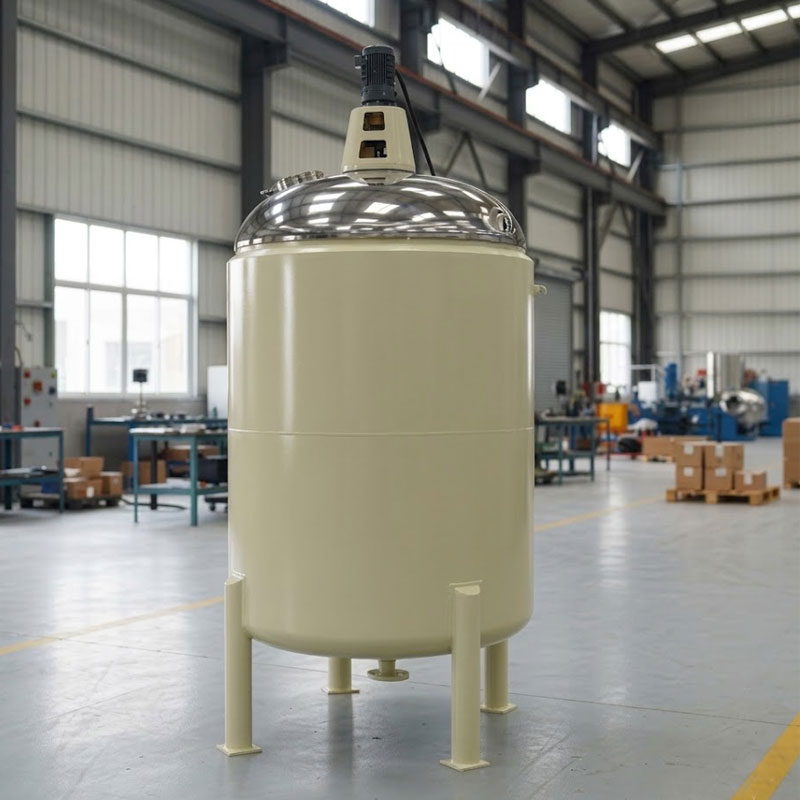
Everyone understands that chemical mixing tanks are a specialized type of tank, distinctly different from ordinary mixing tanks. However, if you lack knowledge about this product line, many people mistakenly believe that chemical mixing tanks are the same as regular mixing tanks. To differentiate between these two products, let’s explore their characteristics and structures.

APPLICATIONS:
– Mixing tanks are used to contain and come into contact with the solvent to be mixed. Their purpose is to dissolve solids, liquids, and gases, or simply to mix substances together to create a desired solvent.
In short, a mixing tank is a tank that can contain and mix various solvents such as paint, soil, mud, chemicals, etc.
– Chemical mixing tanks are designed according to the specific characteristics of each type of chemical in terms of shape, internal structure (with or without partitions), corrosion resistance, and whether or not the tank has impellers. Chemical mixing tanks are usually segmented into four different types:
+ Tanks for concentrated acids: H2SO4, HCl, (CH3CO)2O
+ Tanks for halogens and halogen salts
+ Tanks for organic halogens such as acetyl iodide, iron chloride…

CLASSIFICATION:
Based on different uses and types of chemical solvents, the design of the tank shape (horizontal or vertical) and the type of impeller shaft and impeller are crucial.
Based on the concentration and density of each chemical solvent, the appropriate tank types are designed.
Mixing tanks can generally be classified as follows:
+ Food mixing tanks
+ Paint mixing tanks
+ Chemical mixing tanks
+ Industrial wastewater mixing tanks
+ Mixing tanks for various solvents such as gasoline, oil, grease, etc.
Chemical mixing tanks are a special type of mixing tank due to their high corrosiveness and the chemical reactions that occur. Therefore, suitable materials are needed to ensure safety and the intended purpose.

MATERIALS FOR MIXING TANKS
– The manufacturing of mixing tanks, impellers, and shafts depends entirely on the specific requirements of each unit. However, they share some common characteristics.
– High-grade stainless steel
– Stainless steel 304, 316
Depending on the specific requirements of each unit, the choice of materials and design is appropriate.
Examples:
+ Tanks for industrial wastewater are constructed using reinforced concrete.
+ Paint mixing tanks are made of stainless steel.
+ Chemical mixing tanks are made of SUS 304, SUS 316 stainless steel.
In short, chemical mixing tanks are highly corrosive and frequently undergo chemical reactions, making them a specialized type of tank requiring high technical expertise. Sometimes users may not fully understand mixing tanks and chemical mixing tanks. Simply put, chemical mixing tanks require a specific design.
If you have any further questions, please contact us for more information!
For further details, please contact:
